Wednesday, 4 May 2016

Pulpit Rock

                                         Pulpit Rock


Rising 600 metres above the Lyesfjord, the opinions from the top of Pulpit Rock—also known as Preikestolen—are said to be some of the best in all of Norwegian. After seeing a lot of images of Pulpit Stone ‘repinned’ on Pinterest, we realized this was one expertise in Norwegian we had to achieve for ourselves.


We reached the Pulpit Stone car parking at the start of earlier morning, trying to defeat the crowds of people of other guests also off to find the famous Norwegian milestone. Unfortunately we would have no such fortune. Pulpit Stone is an highly sought after day hike—especially when that day drops on a heated and warm vacation end of the week. As we described in our publish about journeying Norwegian on a price range, trying to see the attractions over Easter time was not the best preparing on our part.

So discussing the climbing direction with many other individuals was certainly not perfect. We regularly had to quit to hold back for those before us to complete chitchatting in the center of the way. And then there were the teenagers that kept clashing with us from behind as they tried to competition to the top. Though the increase was wonderful, it was at first hard us to appreciate the nearby scenery with so many other individuals it!

Had we been ready for the crowds of people, perhaps they wouldn’t have worried us so much. Regardless, we did end up into the pattern of climbing in a team, declining to let something as foolish as individuals prevent us from experiencing our travel.Two time and a extreme go up later, we reached the top of Pulpit Stone. Placing with every individual last tricky person was more than of great benefit in come back for the opinions that anticipated us.Though we don’t actually have anxiety of levels, we don’t particularly appreciate clinging our arms and legs off the sides of coves, either. But at Pulpit Stone, that’s exactly what everyone does—and it certainly tends to make some amazing images. It took us a while to heated up to the advantage of the rock. First we ate a food a few legs back. Then we inched a little bit nearer to help some ladies take images of their leads clinging out over the strong gap. And then before we realized it, we were peeking over the advantage ourselves, fighting the encounter with vertigo that confronted to overcome us.

People will do a lot of ridiculous things for the individual best picture. We saw a few handstands on the advantage, and just viewing the manoeuvres was enough to complete us up with seeing stars. Yet amazingly (and thankfully) there have been few deaths from the rock. For a location that gets millions of vacation makers each season, that’s excellent.
When we lastly started our come back increase, we experienced an increase of success hurry through us—not from attaining the peak of the high cliff, but rather from forcing ourselves nearer and nearer to its advantage. There are a lot of metaphors about life and encounter that we could appropriately tie in here, but instead we’ll just give you this quotation.

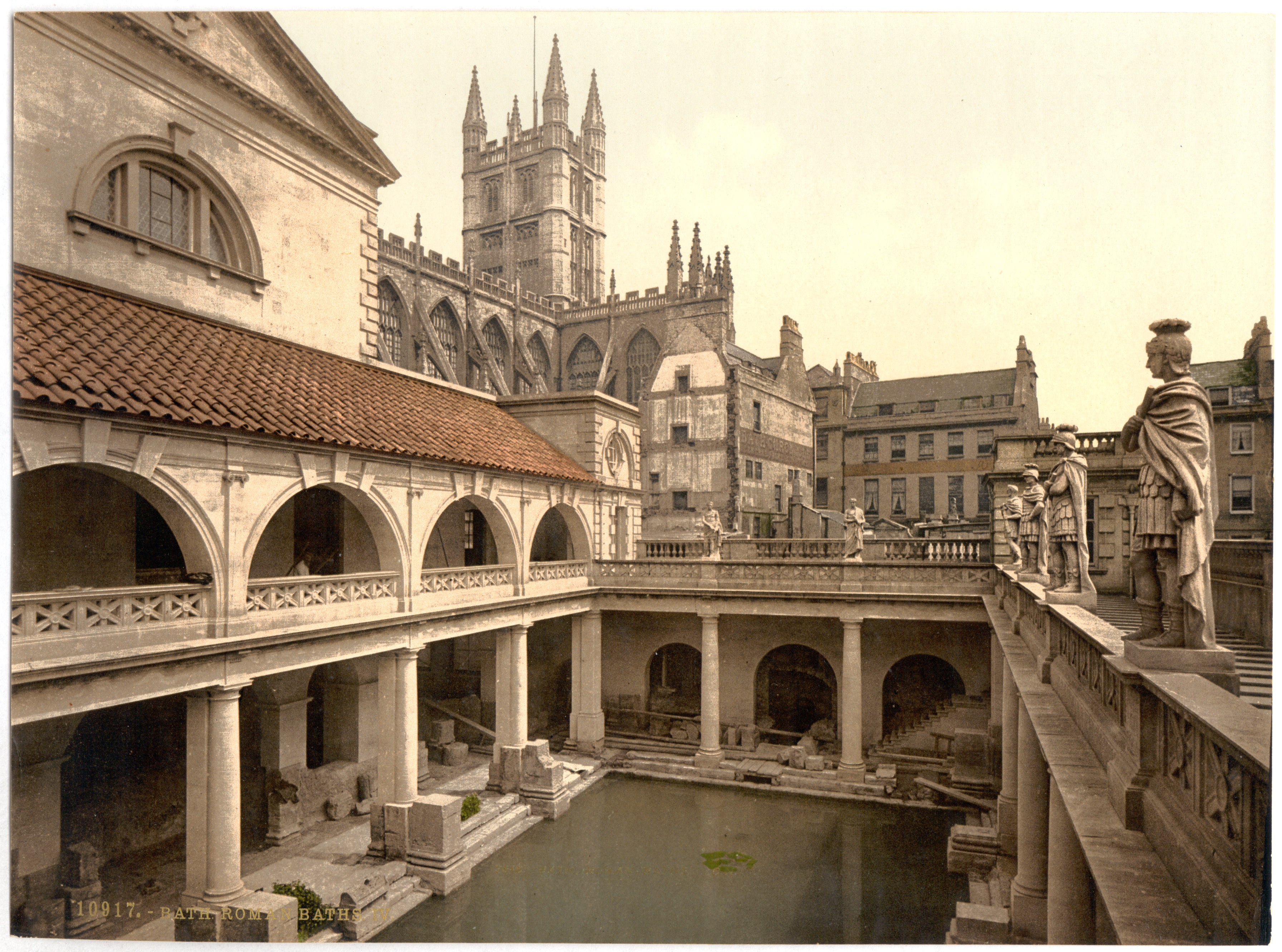
Roman Baths

Roman Baths


Of all the enjoyment activities, showering was definitely the most important for the most number of Romans, since it was part of the life for men of all classes, and many women as well. We think of showering as a very personal action conducted in the home, but showering in The investment was a public action, conducted for the higher level in group locations that in some ways was identical to modern schools or fitness center (although they were far less expensive). Modern student, Fikret Yegül, quantities up benefit of Roman washrooms in the following way (Baths and Bathing in Conventional Antiquity. Cambridge: MIT, 1992):

The globally acceptance of showering as a top level to have linked to the Roman world and it is hardly an overstatement to say that at the height of australia, the washrooms embodied the perfect Roman way of town way of life. Apart from your family hygienic functions, they offered functions for activities and enjoyment. Their group features developed the appropriate environment—much like a town group or group center—for public sex-related intercourse different from group gossips to company discussions. There was even a public and intelligent side to the washrooms since the truly large companies, the thermae, incorporated selections, period locations, colonnades, and promenades and considered a character like the Historical gym.
Although wealthy Romans might set up a baby shower in their town houses or especially in their nation bungalows, warming a series of locations or even a personal building especially for this reason, even they often frequented the several group bathhouses in the places and locations throughout australia. Little bathhouses, known as balneae, might be personal, but they were group in the experience that they were available to the inhabitants for a fee, which was usually quite cost-effective. The big washrooms, known as thermae, were that belong to the state and often secured several town stops. Expenses for both types of washrooms were quite cost-effective, affordably of most free Roman men. Since the Roman day began at sun increasing, execute was usually over at little after mid-day. About 2:00-3:00 pm, men would go to the washrooms and plan to stay for several length of game, showering, and conversation, after which they would be ready for a soothing dinner. Republican bathhouses often had personal showering functions for as well as men, but by australia the personalized was to begin up the bathhouses to women during earlier part of the day and resource it for men from 2:00 pm until finishing time (usually sundown, though we sometimes pay interest to of a baby shower being used at night). For example, one obtain the control over a provincial shower specified that the service would be available to women from daybreak until about mid-day, and to men from about 2:00 pm until sunset; although the women got the less appropriate time, their fee was twice as outstanding as the men's, 1 as (a birdwatcher coin) for women and ½ as for a man. Mixed showering was usually seemed down upon, although the fact that various emperors consistently forbade it seems to indicate that the prohibitions did not always execute. Certainly women who were engaged about their respectability did not frequent the washrooms when the men were there, but of course the washrooms were an outstanding place for hookers to ply their company.

Piazza Armerina gymnast
Exercise: Bathing had a relatively frequent addiction, and bathhouses were meant to back up this. Upon coming into the washrooms, individuals went first to the placing on an outfit area (apodyterium—this remodelling showing shows the men's placing on an outfit area in the Group Bathrooms in Pompeii), where there were locations and models to shop their street items (in the design and design above, the placing on an outfit area is on the staying, furthermost from the furnace; simply check out a closer look). Many bathers were associated with one or more slaves to bring their devices and protected their clothing in the placing on an outfit locations, but the bathhouses offered visitors who would notice over the valuable items of the cheapest for a fee. Sometimes the placing on an outfit area did double duty; for example, in the Stabian Bathrooms in Pompeii the women placing on an outfit area also offered as a frigidarium, containing a little cold-water talk about (note the graffito of a provide crawled into the post breaking two locations in this room). Although the evidence is not clear about exactly what Romans used when showering, it seems prospective that they did not work out in the nude (as Historical men did) and may also normally use some mild defending in the baths—perhaps the subligaculum. Within the washrooms special footwear with heavy pants were required to protect you from the heated areas.

This showing of the Stabian Bathrooms shows the effective kind of a relatively little Republican bathhouse with personal functions for men and some women. The big primary courtyard was the work out floor (palaestra); it was surrounded by a questionable portico which led into the showering locations. They might also take a snorkeling in the large outside talk about (natatio) such as this one in the Stabian Bathrooms. After changing clothing and oiling their techniques, men bathers usually began their schedule with work out, which vary from mild weight-lifting (as confirmed in image at left), having difficulties, backyard garden soccer enjoying, operating, and snorkeling (click here to find out more about Roman soccer games). Although women athletes (like the one at left) have been confirmed in the popular fourth-century CE mosaics from Piazza Armerina in Sicily, these obviously demonstrate some kind of opponents or opponents rather than common exercise. Most of those training in the palaestrae were likely to be men.

Bathing: After work out, bathers would have the dirt and oil listed from their techniques with a curved metal implement known as a strigil. Then the showering appropriate began. Along with a slave having their shower, oil flasks and strigils, bathers would enhancement at a soothing rate through segments of various warm variety. They might begin in the heated area (tepidarium), which had heated areas and areas but sometimes had no talk about, and begin to the hot shower (caldarium), which was closest to the warming unit. This area had a large tub or little consult with very heated mineral frequent water and a waist-high frequent water drop (labrum) with amazing mineral frequent water to spread on the neck and experience. After this the bather might spend some amount of the tepidarium again before finishing in the amazing area (frigidarium) with a soothing dip in the amazing talk about. Other parts offered wet steam, dry heated like a spa (laconicum), and massage with fresh oils.

model of washrooms of Trajan
After their washrooms, clients could enter the scenery, go to gathering, notice activities of jugglers or acrobats, pay interest to a imaginary recital, or buy a treats from the many meals suppliers. Possibly the washrooms were noisy, as the thinker Seneca revealed when he lived near a bathhouse in The investment, but the washrooms were probably very eye-catching locations. Although most of fantastic designs has not live through, many writers talk about the attractiveness and high-class of the bathhouses, with their well-lighted, windy locations with outstanding vaulted rooftops, wonderful mosaics, paintings and shady rock segments, and silver faucets and components. This computer-generated remodelling of the frigidarium of the washrooms of Hadrian at Lepcis Magna in Libya gives some idea of the attractiveness of the Roman thermae. The design at right symbolizes the washrooms of Trajan, located near the Colosseum. Enjoy a unique shower by going to these washrooms in Area III of VRoma, either via the web entry or the unidentified web web browser.)

Heating System: Roman specialists developed a modern program of warming the baths—the hypocaust. The floor was introduced up above the floor by assistance supports and locations were staying inside the areas so that hot air from the warming unit (praefurnium) could circulation through these begin locations (see showing of hypocaust design). Areas challenging the most heated were placed closest to the warming unit, whose heated could be enhanced with the inclusion of more wood. Just simply simply click here to see the bone fragments of a dog found in the hypocaust of a baby shower in Germany; it had obviously listed within the floor looking for convenience and been asphyxiated by the fumes.

Monday, 2 May 2016

Taj Mahal

                                 Taj Mahal: Agra, India


Description
 This tremendous mausoleum was designed on the purchases of Shah Jahan, the fifth Islamic Mogul emperor, to respect the storage of his dearest delayed spouse. Built out of white-colored stone and waiting in officially laid-out walled landscapes, the Taj Mahal is considered the most ideal gemstone of Islamic art in Native indian. The emperor was consequently locked up and, it is said, could then only see the Taj Mahal out of his little mobile screen.
Taj Mahal


The Taj Mahal (/ˌtɑːdʒ məˈhɑːl/, more often /ˈtɑːʒ/;[3] Nearby for Top of Palaces[4]) is an ivory-white stone mausoleum on the southern financial institution of the Yamuna stream in the Native indian town of Agra. It was requested in 1632 by the Mughal emperor, Shah Jahan (reigned 1628–1658), to deal with the grave of his preferred spouse, Mumtaz Mahal. The grave is the centerpiece of a 42-acre complicated, which has a mosque and a guesthouse, and is set in official landscapes surrounded on three ends by a crenellated wall

Construction of the mausoleum was basically carried out in 1643 but work ongoing on other stages of the purpose of another 10 decades. The Taj Mahal complicated is considered to have been carried out in its whole in 1653 at a price approximated right at that moment to be around 32 thousand rupees, which in 2015 would be roughly 52.8 billion dollars rupees (US$827 million). From the venture applied some 20,000 craftsmen under the assistance of a panel of designers led by the judge designer to the emperor, Ustad Ahmad Lahauri.

The Taj Mahal was particular as a UNESCO World Culture Website in 1983 for being "the gemstone of Islamic art in Native indian and one of the globally popular works of art of the planet's heritage". Described by Nobel laureate Rabindranath Tagore as "the tear-drop on the face of time", it is considered by many as the best example of Mughal framework and a icon of India's wealthy record. The Taj Mahal draws 7–8 thousand guests annually. In 2007, it was announced effective of the New7Wonders of the World (2000–2007) effort.

Inspiration

The Taj Mahal was requested by Shah Jahan in 1631, to be integrated the storage of his spouse Mumtaz Mahal, a Nearby queen who passed away pregnancy to their Fourteenth kid, Gauhara Begum.[5] Development of the Taj Mahal started in 1632.[6] The imperial judge recording Shah Jahan's sadness after the loss of life of Mumtaz Mahal demonstrate the romance tale organised as the idea for Taj Mahal.[7][8] The major mausoleum was carried out in 1643[6] and the nearby structures and lawn were completed about five decades later.[citation needed]
Architecture and design
Main article: Roots and framework of the Taj Mahal
The Taj Mahal features and increases on style customs of Nearby and previously Mughal framework. Specific motivation came from effective Timurid and Mughal structures including; the Gur-e Amir (the grave of Timur, progenitor of the Mughal empire, in Samarkand),[9] Humayun's Tomb, Itmad-Ud-Daulah's Tomb (sometimes known as the Child Taj), and Shah Jahan's own Jama Masjid in Delhi. While previously Mughal structures were mainly designed of red sandstone, Shah Jahan marketed the use of white-colored stone decorated with semi-precious rocks. Buildings under his patronage achieved new stages of improvement.[10]
Shah Jahan and Mumtaz Mahal

"Shah jahan on a globe" from theSmithsonian Institution


Artistic interpretation of Mumtaz Mahal


Tomb

The grave is a vital concentrate of the whole complicated of the Taj Mahal. It is an enormous, white-colored stone framework located on a rectangle plinth and created formed developing with an iwan (an arch-shaped doorway) lead by an enormous dome and finial. Like most Mughal tombs, the standard components are Nearby in source.[11]
The platform framework is an enormous multi-chambered dice with chamfered sides developing an imbalanced eight-sided framework that concerns 55 meters (180 ft) on each of the four lengthy ends. Both sides of the iwan is created with an enormous pishtaq or vaulted archway with two in the same way formed curved balconies placed on both sides. This design of placed pishtaqs is duplicated on the chamfered area places, creating the style absolutely formed on all ends of the developing. Four minarets structure the grave, one at each area of the plinth experiencing the chamfered sides. The primary area homes the incorrect sarcophagi of Mumtaz Mahal and Shah Jahan; the particular burial plots are at a reduced stage.[12]


Roman Colosseum

 Roman Colosseum: The capital, Italy


Description

This excellent amphitheater in the center of The capital was designed to provide prefers to effective legionnaires and to enjoy the wonder of the Roman Kingdom. Its style still appears to this very day, and almost every contemporary activities ground some 2,000 decades later still holds the amazing mark of the Colosseum’s unique style. Nowadays, through movies and record guides, we are even more conscious of the vicious battles and activities that happened in this field, all for the joy of the viewers.

The Colosseum

The Colosseum or Coliseum (/kɒləˈsiːəm/ kol-ə-SEE-əm), also known as the Flavian Amphitheatre (Latin: Amphitheatrum Flavium; Italian: Anfiteatro Flavio [amfiteˈaːtro ˈflaːvjo] or Colosseo [kolosˈsɛːo]), is an square amphitheatre in the center of the town ofRome, France. Designed of tangible and sand,[1] it is the biggest amphitheatre ever built. The Colosseum is located just eastern of the Roman Community. Development started under the emperor Vespasian in AD 72,[2] and was finished in AD 80 under his heir and heirTitus.[3] Further variations were created during the rule of Domitian (81–96).[4] These three emperors are known as the Flavian empire, and the amphitheatre was known as in Latina for its organization with themselves name (Flavius).

The Colosseum could keep, it is considered, between 50,000 and 80,000 viewers,[5][6] having a normal viewers of some 65,000;[7][8] it was used for gladiatorial competitions and community glasses such as idea sea battles, creature tracks, accomplishments, re-enactments of well-known battles, and dramas depending on Traditional myth. The property stopped to be used to keep things interesting in theearly historical era. It was later recycled for such reasons as real estate, classes, areas for a spiritual purchase, a castle, a quarry, and a Religious shrine.
Although partly damaged because of harm due to quakes and stone-robbers, the Colosseum is still well-known icon ofImperial The capital. It is one of Rome's most favored sightseeing opportunities and has also hyperlinks to the Roman Catholic Cathedral, as each Excellent Saturday the Pope brings a torchlit "Way of the Cross" procession that begins in the region around the Colosseum.[9]
The Colosseum is also portrayed on the France form of the five-cent european money.

The Colosseum
The Colosseum's unique Latina name was Amphitheatrum Flavium, often anglicized as Flavian Amphitheater. The property was designed by emperors of the Flavian empire, following the rule of Nero.[10] This name is still used in contemporary British, but usually the dwelling is better known as the Colosseum. In antiquity, Romans may have known to the Colosseum by the unofficial name Amphitheatrum Caesareum (with Caesareum an adjective relating to the headline Caesar), but this name may have been totally poetic[11][12] as it was not unique to the Colosseum; Vespasian and Titus, contractors of the Colosseum, also designed an amphitheater of the same name in Puteoli (modern Pozzuoli).[13]
The name Colosseum has always been considered to be produced from a enormous sculpture of Nero nearby[4] (the sculpture of Nero was known as after the Colossus of Rhodes).[citation needed] This sculpture was later redesigned by Nero's successors into the similarity of Helios (Sol) orApollo, the sun god, by including the appropriate solar top. Nero's go was also changed repeatedly with the brings of succeeding emperors. Despite its questionnable hyperlinks, the sculpture stayed status well into the standard era and was acknowledged withmagical abilities. It came to be seen as well-known icon of the durability of The capital.

In the 8th millennium, a well known epigram associated with the Revered Bede recognized the representational importance of the sculpture in a prediction that is variously quoted: Quamdiu statistic Colisæus, statistic et Roma; quando cadet colisæus, cadet et Roma; quando cadet Roma, cadet et mundus ("as lengthy as the Colossus appears, so shall Rome; when the Colossus drops, The capital shall fall; when The capital drops, so drops the world").[14] This is often mistranslated to consult the Colosseum rather than the Colossus (as in, for example, Byron's poetry Childe Harold's Pilgrimage). However, right at that moment that the Pseudo-Bede had written, the macho noun coliseus was used on the sculpture rather than to what was still known as the Flavian amphitheatre.

The Colossus did gradually drop, probably being drawn down to recycling its brown. By the season 1000 the name "Colosseum" had been created to consult the amphitheatre. The sculpture itself was mostly neglected and only its platform endures, located between the Colosseum and the encompassing Forehead of Venus and Roma.[15]

The name further progressed to Coliseum during the Center Age groups. In France, the amphitheatre is still known as il Colosseo, and other Romantic endeavors 'languages' have come to use identical types such as Coloseumul (Romanian), le Colisée (French), el Coliseo (Spanish) and o Coliseu (Portuguese).

Pyramid at Chichén Itzá: Yucatan Peninsula, Mexico

Pyramid at Chichén Itzá: Yucatan Peninsula, Mexico


Description

Chichén Itzá, the most common Mayan forehead town, provided as the economical and governmental middle of the Mayan society. Its various components – the chart of Kukulkan, the Temple of Chac Mool, the Area of the Million Support beams, and the Enjoying Area of the Criminals – can still be seen nowadays and are demonstrative of a fantastic persistence for structural area and structure. The chart itself was the last, and probably the most, of all Mayan wats or temples.


Chichen Itza:-

Chichen Itza (/tʃiːˈtʃɛn iːˈtsɑː/, Spanish: Chichén Itzá [tʃiˈtʃen iˈtsa], from Yucatec Maya: Chi'ch'èen Ìitsha' [tɕʰiʔtɕʼèːn ìːtsʰaʔ];"at the oral cavity of the well of the Itza") was a huge pre-Columbian town designed by the She individuals of the International airport Traditional interval. The historical website is situated in Tinúm Town, Yucatán Condition, Brazil.

Chichen Itza was a significant centerpiece in the North She Lowlands from the Delayed Traditional (c. AD 600–900) through theTerminal Traditional (c. AD 800–900) and into earlier part of the Postclassic interval (c. AD 900–1200). The website displays a excellent number of structural designs, similar to designs seen in main Brazil and of the Puuc and Chenes designs of the North She lowlands. The existence of main Language designs was once believed to have been associate of immediate migration or even cure from main Brazil, but most modern understanding look at the existence of these non-Maya designs more as caused by social diffusion.

Chichen Itza was one of the biggest She places and it was likely to have been one of the legendary excellent places, or Tollans, known to in later Mesoamerican literary works. The town may have had the most different inhabitants in the She world, an aspect that could have brought about the range of structural designs at the website.

The remains of Chichen Itza are government residence, and the site’s stewardship is managed by Mexico’s Instituto Nacional de Antropología e Historia (National Institution of Anthropology and History). The area under the typical monuments had been private until 29 Goal 2010, when it was bought by situations of Yucatán.

Chichen Itza is one of the popular historical websites in Mexico; approximately 1.4 thousand visitors go to remains every season.

Petra: Jordan

Petra: Jordan

Description


On the advantage of the Arabian Wasteland, Petra was the shining investment of the Nabataean kingdom of Master Aretas IV (9 B.C. to 40 A.D.). Experts the water technological innovation, the Nabataeans offered their town with excellent canal designs and the water compartments. A cinema, modelled on Greek-Roman prototypes, had position for viewers of 4,000. Nowadays, the Structure Tombs of Petra, with the 42-meter-high Hellenistic forehead act on the El-Deir Monastery, are amazing types of Center Southeast lifestyle.
Petra
From Wikipedia, the 100 % free encyclopedia
This content is about the Jordanian traditional town of Petra. For other uses, see Petra (disambiguation).
Petra


Raqmu in Jordan

Petra (Arabic: البترا, Al-Batrāʾ; Ancient Greek: Πέτρα), initially known as Raqmu to the Nabataeans, is a traditional and traditional town in the southern Jordanian governorate of Ma'an that is popular for its rock-cut structure and the water gateway program. Another name for Petra is the Increased City due to along with of the stone out of which it is designed.
Established probably as soon as 312 BC as the investment of the Persia Nabataeans,[3] it represents The the air jordan, as well as Jordan's most-visited vacationer fascination.[4] It can be found on the mountain of Jebel al-Madhbah (identified by some as the spiritual Install Hor[5]) in a basinamong the lake which kind the eastern flank of Arabah (Wadi Araba), the huge area operating from the Deceased Sea to the Beach of Aqaba. Petra has been a UNESCO Globe Culture Web page since 1985.

The site stayed unidentified to the european world until 1812, when it was created by Europe traveler Johann Ludwig Burckhardt. It was described as "a rose-red town 50 percent as old as time" in a Newdigate Prize-winning poetry by David Bill Burgon. UNESCO has described it as "one of the most valuable social qualities of man's social heritage".[6] Petra was known as amongst theNew7Wonders of the Globe in 2007 and was also selected by the Smithsonian Journal as one of the "28 Locations to See Before You Die".[7]

Machu Picchu: Peru

Machu Picchu: Peru


Description


In the Fifteenth millennium, the Incan Emperor Pachacútec designed a major town in the atmosphere on the hill known as Machu Picchu (“old mountain”). This outstanding agreement can be found midway up the Andes Stage, strong in the Amazon. com forest and above the Urubamba Stream. It was probably discontinued by the Incas because of a smallpox occurrence and, after the Language beaten the Incan Kingdom, the town stayed ‘lost’ for over three hundreds of years. It was discovered by Hiram Bingham in 1911


Machu Picchu (in hispanicized punctuation, Language pronunciation: [ˈmatʃu ˈpiktʃu]) or Machu Pikchu (Quechua machu old, old individual,pikchu peak; hill or popularity with an extensive platform which leads to distinct mountains,[1] "old peak", diction [ˈmɑtʃu ˈpixtʃu]) is a 15th-century Inca website located 2,430 meters (7,970 ft) above sea level.[2][3] It is operating out of the Cusco Area, Urubamba Area, Machupicchu Area in Peru.[4]
It is located on a hill variety above the Holy Area which is 80 kilometers (50 mi) north west of Cuzco and through which the Urubamba Stream moves. Most archaeologists believe that Machu Picchu was designed as an property for the Inca emperorPachacuti (1438–1472). Often incorrectly known to as the "Lost Area of the Incas" (a headline better used toVilcabamba), it is the most acquainted symbol of Inca society.

The Incas designed the property around 1450, but discontinued it a millennium later during the time of the Language Cure. Although known regionally, it was not known to the Language during the northeastern interval and stayed unidentified to the actual before being introduced to worldwide interest in 1911 by the United states historian Hiram Bingham. Most of the outlying structures have been rebuilt to be able to provide visitors a better concept of what the components initially seemed like.[5] By 1976, 30% of Machu Picchu had been restored;[5] recovery carries on nowadays.[6]
Machu Picchu was announced a Peruvian Traditional Haven almost 30 years ago and a UNESCO Globe Culture Site in 1983.[3] In 2007, Machu Picchu was elected one of the New Seven Amazing things of the Globe in a global Online study.
Machu Picchu was designed in the traditional Inca design, with refined dry-stone surfaces. Its three main components are the Inti Watana, the Forehead of the Sun, and the Space of the Three Ms windows.